

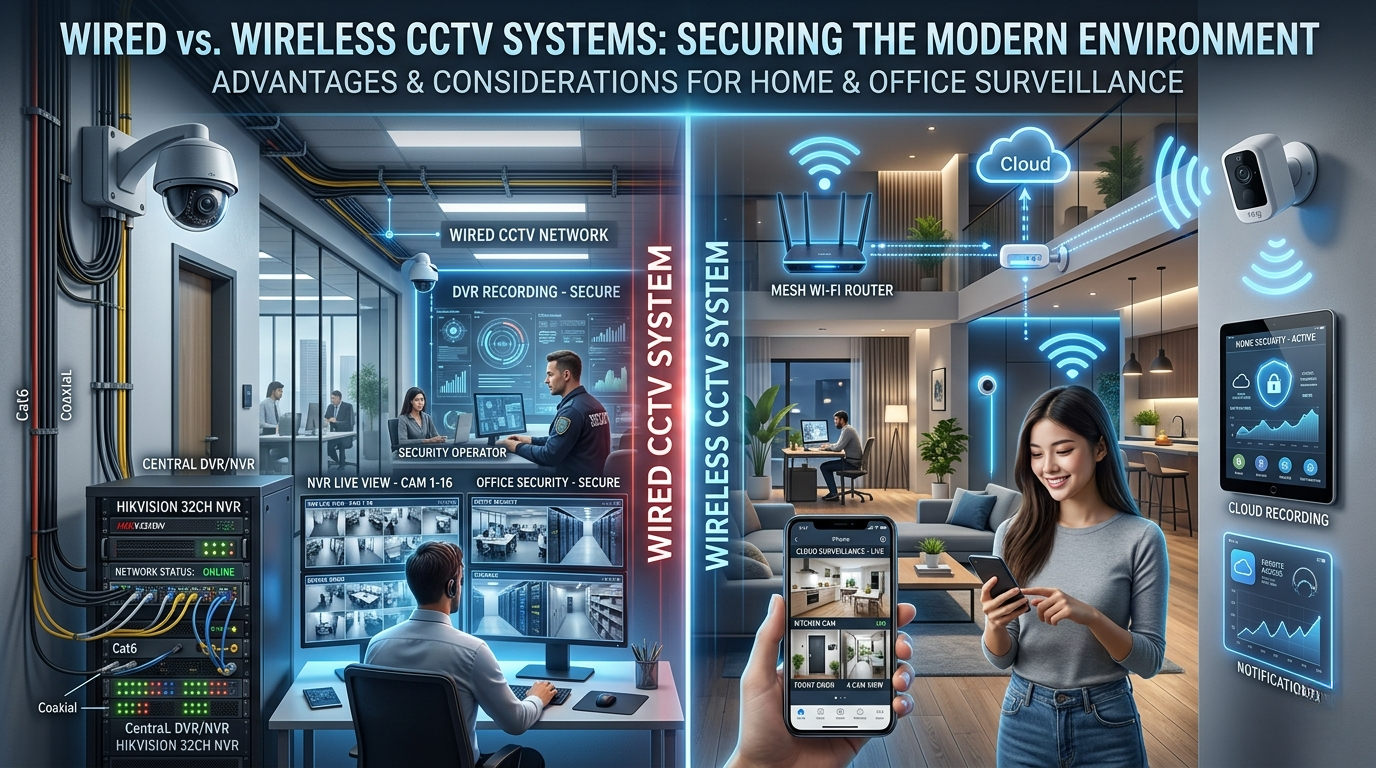
Security has become one of the biggest priorities for homeowners and businesses today. Whether you want to protect your house, office, shop, warehouse, or apartment, installing a CCTV surveillance system is one of the smartest investments you can make.
However, many people get confused when choosing between Wired vs wireless CCTV cameras. Both systems offer security benefits, but they work differently and are suitable for different environments.
In this complete guide, we’ll compare wired and wireless CCTV systems, explain their advantages and disadvantages, and help you decide which option is best for your needs.
What Are Wired CCTV Cameras?
Wired CCTV cameras are traditional surveillance systems that use cables to transmit video signals and power. These cameras are usually connected to a DVR (Digital Video Recorder) or NVR (Network Video Recorder) through wires.
A wired CCTV setup typically includes:
- CCTV cameras
- Coaxial or Ethernet cables
- DVR/NVR system
- Power supply
- Storage device
These systems are commonly used in:
- Offices
- Shops
- Warehouses
- Schools
- Large homes
- Industrial areas
Because wired systems use physical cable connections, they provide stable video transmission and reliable long-term surveillance.
What Are Wireless CCTV Cameras?
Wireless CCTV cameras use Wi-Fi or wireless networks to transmit video footage. Unlike wired systems, these cameras require minimal cabling and can often be managed using smartphone apps.
Wireless systems generally include:
- Wi-Fi-enabled cameras
- Cloud or SD card storage
- Mobile app connectivity
- Internet connection
These cameras are popular for:
- Apartments
- Small homes
- Temporary setups
- Smart homes
- Rental properties
Wireless CCTV systems are known for easy installation and smart features such as motion alerts, remote viewing, and voice assistant integration.
Wired vs Wireless CCTV Cameras: Key Differences
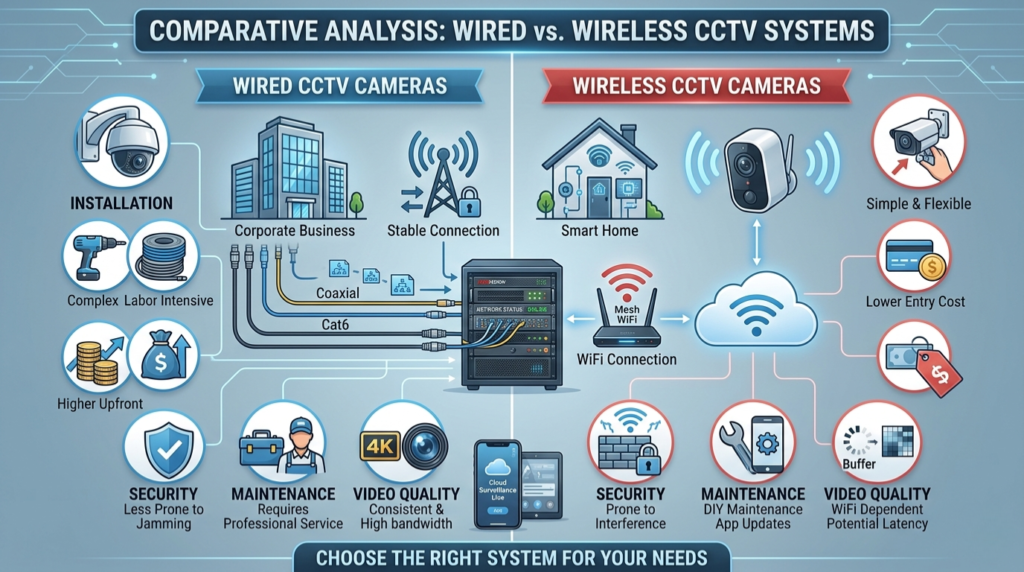
1. Installation Process
Wired CCTV Cameras
Wired systems require professional installation because cables must be routed through walls, ceilings, or floors. The installation process may take longer, especially for large properties.
Wireless CCTV Cameras
Wireless cameras are much easier to install. Many homeowners can set them up without professional help. Since fewer cables are needed, installation is cleaner and faster.
Winner:
Wireless cameras for easy setup.
2. Video Quality & Connection Stability
Wired CCTV Cameras
Wired systems provide a stable and uninterrupted connection. They are less affected by signal interference and usually offer consistent high-quality video recording.
Wireless CCTV Cameras
Wireless cameras depend heavily on Wi-Fi strength. Weak internet signals can cause lag, buffering, or video loss.
Winner:
Wired CCTV cameras for reliability and stable footage.
3. Internet Dependency
Wired CCTV Cameras
Most wired systems can operate without internet. Recording continues locally through the DVR or NVR even during internet outages.
Wireless CCTV Cameras
Wireless cameras often rely on internet connectivity for remote viewing and cloud storage.
Winner:
Wired cameras for offline reliability.
4. Power Supply
Wired CCTV Cameras
These cameras are connected directly to power sources, making them suitable for continuous 24/7 recording.
Wireless CCTV Cameras
Some wireless cameras use rechargeable batteries. While convenient, they require regular charging or battery replacement.
Winner:
Wired systems for uninterrupted power.
5. Security & Hacking Risks
Wired CCTV Cameras
Wired systems are generally more secure because they are not dependent on wireless networks.
Wireless CCTV Cameras
Wireless systems can be vulnerable to hacking if weak passwords or unsecured Wi-Fi networks are used.
Winner:
Wired cameras for stronger security.
6. Maintenance
Wired CCTV Cameras
Maintenance usually involves checking cables and recording equipment occasionally.
Wireless CCTV Cameras
Wireless cameras may require battery maintenance, software updates, and Wi-Fi troubleshooting.
Winner:
Depends on usage, but wired systems often require less routine attention.
7. Cost Comparison
Wired CCTV Cameras
Initial installation costs are usually higher because of wiring and professional setup.
Wireless CCTV Cameras
Wireless systems may have lower installation costs, but cloud storage subscriptions and battery replacements can increase long-term expenses.
Winner:
Wireless for lower upfront cost, wired for long-term reliability.
Advantages of Wired CCTV Cameras
Reliable Connection
Wired cameras provide uninterrupted surveillance with minimal signal loss.
Better for Large Properties
Ideal for offices, warehouses, factories, and large homes.
Continuous Recording
Perfect for 24/7 monitoring and high-security environments.
Better Video Quality
Stable transmission ensures consistent HD or 4K footage.
Disadvantages of Wired CCTV Cameras
Complex Installation
Professional setup is usually required.
More Wiring
Cable management can be difficult in existing buildings.
Less Flexible
Relocating cameras can be challenging once installed.
Advantages of Wireless CCTV Cameras
Easy Installation
Quick setup without extensive wiring.
Flexible Placement
Cameras can be moved easily when needed.
Smart Features
Remote viewing, motion alerts, cloud storage, and mobile access.
Ideal for Small Homes
Perfect for apartments and compact spaces.
Disadvantages of Wireless CCTV Cameras
Wi-Fi Dependency
Poor internet can affect performance.
Battery Maintenance
Battery-powered cameras require regular charging.
Potential Signal Interference
Walls and electronic devices may reduce signal strength.
Cybersecurity Risks
Weak network security can make systems vulnerable.
Which CCTV Camera Is Best for Home Security?
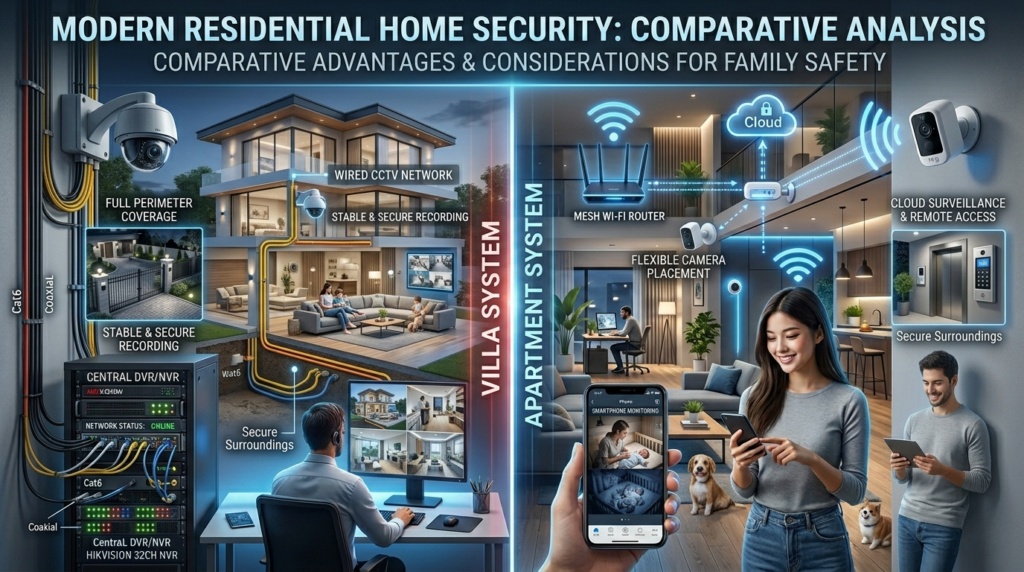
The best option depends on your property type and security needs.
Choose Wireless CCTV Cameras If:
- You live in an apartment
- You want simple installation
- You need mobile access and smart features
- You prefer flexible camera placement
Choose Wired CCTV Cameras If:
- You own a large house
- You need continuous recording
- You want maximum reliability
- You require advanced security coverage
For many homeowners, a hybrid system combining wired and wireless cameras can also be a practical solution.
Which CCTV Camera Is Best for Businesses?
Businesses usually require reliable 24/7 monitoring, making wired CCTV systems more suitable in most cases.
Wired CCTV Is Best For:
- Offices
- Retail shops
- Warehouses
- Factories
- Schools
- Commercial buildings
Businesses often need:
- Multiple camera support
- Long recording storage
- Stable surveillance
- Better security integration
Wireless systems may still work well for:
- Small offices
- Temporary stores
- Small retail spaces
Factors to Consider Before Choosing a CCTV Camera
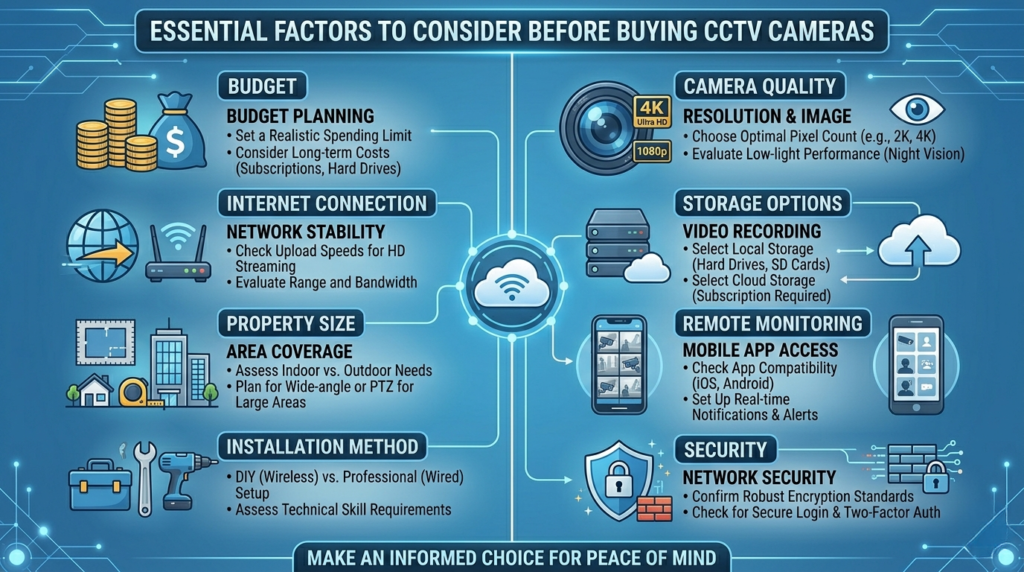
Before purchasing a security system, consider these important factors:
1. Budget
Determine whether you want lower upfront costs or long-term reliability.
2. Property Size
Large properties usually benefit from wired systems.
3. Internet Availability
Wireless cameras require strong and stable Wi-Fi.
4. Installation Area
Indoor and outdoor setups may need different camera types.
5. Storage Requirements
Decide between local DVR storage or cloud-based storage.
6. Remote Monitoring
Wireless systems are excellent for smartphone access.
7. Future Expansion
Consider whether you may need additional cameras later.
Tips for Better CCTV Security
No matter which system you choose, these tips can improve your overall security:
- Use strong passwords for all CCTV accounts
- Update firmware regularly
- Install cameras at proper angles
- Keep backup power systems ready
- Clean camera lenses regularly
- Secure your Wi-Fi network
- Monitor storage space frequently
Proper maintenance ensures better performance and longer system life.
Why Professional CCTV Installation Matters
Many people underestimate the importance of professional CCTV installation. Incorrect placement or poor setup can reduce surveillance effectiveness.
Professional installation helps with:
- Proper camera positioning
- Better cable management
- Maximum coverage
- Correct recording setup
- Improved night vision performance
- Long-term system reliability
Experts can also recommend the best CCTV solution based on your property layout and security requirements.
Conclusion
When comparing Wired vs wireless CCTV cameras, there is no one-size-fits-all answer. Both systems offer excellent security benefits, but the right choice depends on your needs, budget, and property type.
Choose Wired CCTV Cameras If:
- You want maximum reliability
- You need 24/7 recording
- You own a large property
- Security is your top priority
Choose Wireless CCTV Cameras If:
- You prefer easy installation
- You want smart mobile features
- You need flexible placement
- You live in a small home or apartment
Investing in the right CCTV system can significantly improve the safety of your home or business.
If you are looking for professional CCTV installation, security consultation, or surveillance system upgrades, Accurate IT Solutions can help you choose the best security setup for your property.
Related Blogs
Professional Laptop Repair Services| Benefits of Installing CCTV Cameras| Refurbished Laptop| CCTV installation cost| CCTV Installation Company| Printer common issues & solutions|Printer maintenance tips|Laptop Overheating|SSD vs HDD Upgrade|Laptop vs Desktop Repairs